The short answer
Pomegranate juice is one of the very few ED food trends that was put to a real test. In a 2007 randomized, placebo-controlled, double-blind study of 53 men with mild to moderate erection difficulties, more men improved while drinking pomegranate juice than while drinking a look-alike placebo — a promising trend (P=0.058) that just missed statistical significance. The likely reason is its rich load of antioxidants, which may support the nitric oxide behind healthy blood flow*. The catch is the routine: a glass every day, about 30 grams of natural sugar per cup, a noticeable grocery bill and possible medication interactions. If you like the idea but not the daily juice habit, that's exactly the job VigorBoost was built for — the same territory, in one clean daily capsule.
Why pomegranate keeps showing up in men's health searches
Search for "pomegranate juice for erectile dysfunction", "pomegranate natural Viagra" or "is pomegranate good for men" and you'll find a flood of short videos, headlines and juice-bar menus making the same promise: a glass a day for better performance. Some versions add beetroot or ginger (we look at the beet juice trend for ED on its own); others swear by eating the seeds (arils) straight from the fruit.
Most kitchen tricks for men's performance — like the baking soda trick for ED — have no human study behind them at all. Pomegranate is different. It sits alongside watermelon as one of the rare foods researchers actually tested in men, which is why it deserves a closer, fair look.
The science: antioxidants, nitric oxide and blood flow
Here's the logic behind the trend, step by step:
- Erections depend on blood flow. When you're aroused, blood vessels in the penis relax and blood rushes in. The key messenger for that relaxation is nitric oxide.
- Nitric oxide is fragile. Oxidative stress — from age, poor diet, smoking or high blood sugar — breaks it down faster, which can leave circulation less responsive.
- Pomegranate is packed with polyphenol antioxidants, especially compounds called punicalagins and anthocyanins (they give the juice its deep red color).
- The theory: by helping neutralize oxidative stress, those antioxidants may help protect nitric oxide and support healthier blood vessel function*. It's a gentle, gradual support, not an on-demand switch.
What the 2007 study actually found
The best-known human evidence is a pilot trial by Forest, Padma-Nathan and Liker, published in the International Journal of Impotence Research in 2007. Here's how it worked and what it showed:
- Design: randomized, placebo-controlled, double-blind and crossover — the men didn't know which drink they had, and each man tried both.
- Who: 53 men who completed the study, all with mild to moderate erectile dysfunction.
- How: two 4-week periods (pomegranate juice vs. a placebo drink), separated by a 2-week washout.
- Result: of the 42 men whose global scores improved, 25 improved on pomegranate juice. Men were more likely to improve while drinking the juice (P=0.058).
The researchers were upfront: overall statistical significance wasn't achieved, but they concluded the pilot suggests larger groups and longer treatment periods could get there. In plain terms, it's an encouraging signal — stronger than almost any other kitchen remedy can claim — but a gentle one, observed over just four weeks.
The catch: a daily glass is harder than it sounds
The appeal of the trend is simplicity. In real life, a pomegranate routine asks more of you than the videos admit:
| Factor | What the trend says | What it really takes |
|---|---|---|
| Frequency | "Just drink some" | A glass every single day, for weeks |
| Sugar | "It's natural" | Roughly 30 g of natural sugar per 8-oz cup of 100% juice |
| Quality | Any bottle will do | Blends and "cocktails" are often mostly apple or grape juice plus added sugar |
| Cost | Cheap fix | 100% pomegranate juice is one of the pricier juices on the shelf |
| Medication | Not mentioned | May interact with some blood-thinner and blood-pressure drugs — ask your doctor |
| The fresh fruit | "Eat the seeds" | Seasonal, messy to open, and you'd need a lot of it daily |
None of this makes pomegranate a bad choice — it's a delicious, antioxidant-rich food and a great part of a healthy diet. It simply means the "glass a day" approach comes with a sugar bill, a grocery bill and a discipline requirement that most men quietly drop after a couple of weeks. And if you manage your weight or blood sugar, a daily cup of juice is worth discussing with your doctor first.
Pomegranate vs. watermelon: which trend has more behind it?
Both point at the same pathway — nitric oxide and blood flow — from different angles. Watermelon supplies citrulline, a building block your body turns into nitric oxide, and a small 2011 study saw erection hardness improve with a measured citrulline dose (we break it down in watermelon for erectile dysfunction). Pomegranate works on the protection side, with antioxidants that may help nitric oxide last. Neither is a treatment, both are encouraging, and both run into the same real-world problem: they need a lot of food, every day.
Other habits that support healthy blood flow
- Move most days. Brisk walking, cycling or swimming supports the blood vessels and nitric oxide production erections rely on.
- Eat colorful plants. Berries, leafy greens, beets, nuts and olive oil — plus pomegranate in sensible amounts — support circulation.
- Protect your sleep. Seven to eight hours supports energy, mood and drive.
- Go easy on alcohol and skip smoking. Both work against healthy blood vessels.
- Know your numbers. Blood pressure, blood sugar and cholesterol shape circulation everywhere. Our guide on why libido and stamina slip with age covers the bigger picture.
The ready-made version of the idea: VigorBoost
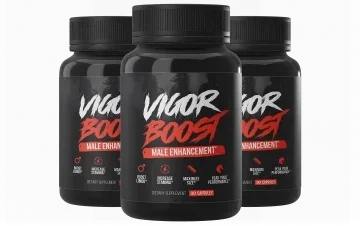
Here's the good news for anyone drawn to the pomegranate trend: you don't need a fridge full of juice to chase the same goal. VigorBoost was built for exactly the territory the pomegranate research points at — supporting the blood flow, stamina and drive that healthy performance depends on — captured in its four label goals: boost libido*, increase stamina*, maximize size* and peak your performance*. No daily sugar load, no hunting for 100% juice, no peeling fruit. Just one small capsule a day with water, all year round.
Men quoted by the maker describe noticing a real difference in as little as 5 days to two weeks* — "I noticed a difference in just 5 days," writes Chris W.; "within two weeks I noticed a real difference," says Mark T. It's made in the USA in an FDA-registered, GMP-certified facility, trusted by more than 28,000 men, and backed by a 90-day money-back guarantee.
🥤 The pomegranate juice routine
- An encouraging study — but you run the routine yourself
- A glass every day, for weeks
- About 30 g of natural sugar per cup
- Pricey, and blends are easy to get wrong
- Possible medication interactions
⚡ VigorBoost
- Made for the same goals the trend chases
- One measured capsule a day, no sugar
- Made in the USA, FDA-registered, GMP-certified facility
- Customers report results in 5 days to two weeks*
- 90-day money-back guarantee
As with any supplement, if you take prescription medication — especially for blood pressure or your heart — check with your doctor first. Curious about another kitchen favorite? Read our take on the viral honey trick for ED.
Our recommendation: VigorBoost
Pomegranate juice earns its reputation, but a daily glass means a lot of sugar, a lot of cost and a lot of discipline. For men who want daily support for the same goal without the juice routine, VigorBoost is the option we recommend.
- Built for performance, not just antioxidants. boost libido*, increase stamina*, maximize size* and peak your performance*.
- No sugar, no fridge. One capsule a day, 30 per bottle.
- Made in the USA in an FDA-registered, GMP-certified facility, GMO-free.
- Cheaper than a juice habit. From $19.99 per bottle on Buy 3 Get 3, free shipping, and a 90-day money-back guarantee.
Frequently asked questions
Does pomegranate juice help with erectile dysfunction?
It may help a little, and it's one of the few food trends that was actually tested. In a 2007 randomized, placebo-controlled, double-blind crossover study published in the International Journal of Impotence Research, 53 men with mild to moderate erectile dysfunction drank pomegranate juice or a placebo drink for four weeks each. Of the 42 men who improved, 25 improved while drinking pomegranate juice. The trend favored pomegranate (P=0.058) but didn't reach statistical significance, so the authors called it a promising pilot result rather than proof.
How does pomegranate juice work for blood flow?
Pomegranate is rich in polyphenol antioxidants such as punicalagins. The idea is that these antioxidants help protect the nitric oxide your blood vessels produce — the signal that relaxes vessels so blood can flow into an erection. It's a gentle, gradual support for circulation, not a quick switch like prescription drugs.
How much pomegranate juice should I drink?
The study gave men a daily glass of juice for four weeks. There's no official dose for erection support. Keep in mind that an 8-ounce cup of 100% pomegranate juice carries roughly 30 grams of natural sugar, so a daily glass is a real consideration if you watch your weight or blood sugar.
Can pomegranate juice interact with medication?
Possibly. Pomegranate juice has been discussed as a potential interaction with some medications, including certain blood thinners and blood-pressure drugs, in a way similar to grapefruit juice. If you take prescription medication, ask your doctor or pharmacist before drinking it daily.
Is there a ready-made alternative to the pomegranate juice routine?
Yes. VigorBoost was made for the same goals the pomegranate trend chases — supporting blood flow, stamina and drive. Instead of a sugary glass of juice every day, it's one small capsule a day, made in the USA in an FDA-registered, GMP-certified facility, and customers quoted by the maker describe noticing a difference in as little as 5 days to two weeks*. It's a dietary supplement, results vary, and it comes with a 90-day money-back guarantee.
When should I see a doctor about erection problems?
If erection problems are frequent, getting worse, or came on suddenly, talk to a doctor. Erectile dysfunction can be an early sign of high blood pressure, diabetes or heart disease, which are worth catching early, and proven treatments exist.
Want the easier daily routine? Get VigorBoost on the official site →
The bottom line
Pomegranate juice earns more respect than most kitchen tricks: it was tested in a real double-blind, placebo-controlled trial, and men were more likely to improve while drinking it — an encouraging signal that just missed statistical significance. Its antioxidants may genuinely help support the nitric oxide behind healthy blood flow*. The honest catch is the delivery: a glass every day, a steady sugar load, a real grocery bill and a medication question to check. Enjoy pomegranate as part of a healthy diet, by all means. But if you want the idea working for you every day without the juice routine, the ready-made route is one capsule with a 90-day guarantee behind it: VigorBoost.
Sources
- Forest CP, Padma-Nathan H, Liker HR. Efficacy and safety of pomegranate juice on improvement of erectile dysfunction in male patients with mild to moderate erectile dysfunction: a randomized, placebo-controlled, double-blind, crossover study. International Journal of Impotence Research. 2007. PubMed 17568759 (53 completed subjects, two 4-week periods, 2-week washout; 25 of 42 improvers on juice, P=0.058).
- NIDDK. Symptoms & causes of erectile dysfunction.
- Sugar content of pomegranate juice: USDA FoodData Central, "Pomegranate juice, bottled."
This article is general information, not medical advice. Pomegranate juice and dietary supplements are not proven treatments for erectile dysfunction. If you have a specific medical concern, or you take prescription medication — especially nitrates, blood thinners or blood-pressure drugs — talk to a licensed clinician before starting any supplement or home remedy.