The short answer
Four of the five viral kitchen remedies point at the same real pathway, nitric oxide and blood flow, and one points at nothing at all. Pomegranate juice and watermelon's citrulline are the only two with a study on men's erections, and both showed modest, promising results rather than a cure. Beet juice and honey borrow the same biology without ED-specific research. Baking soda has no evidence and a real sodium cost. Every one of them depends on a daily habit most men quit within weeks, which is why our recommendation for the same goal is simpler: the once-a-day VigorBoost capsule.
Over the past month we have taken apart the five kitchen remedies men search for most when erections start to feel less reliable: the baking soda trick, the honey trick, the watermelon "natural Viagra", pomegranate juice and, most recently, beet juice. Each article answered one question. This one answers the question readers kept asking afterwards: if I only try one, which is it, and is any of them worth the daily effort?
The one idea behind four of the five trends
An erection is a blood-flow event. When you're aroused, a tiny messenger called nitric oxide tells the smooth muscle in the blood vessels of the penis to relax, the arteries widen and blood rushes in. Anything that may support nitric oxide, or the health of those vessels, gets a "natural Viagra" headline sooner or later.
That is exactly what beets, watermelon, pomegranate and honey have in common. They reach the pathway from different doors:
- Beet juice supplies dietary nitrate, which bacteria on your tongue and then your body convert toward nitric oxide.
- Watermelon supplies citrulline, an amino acid the body turns into arginine, the raw material for nitric oxide.
- Pomegranate supplies antioxidants thought to protect nitric oxide and the lining of blood vessels.
- Honey was shown in one human study to raise nitrite, a nitric oxide marker, in saliva, plasma and urine, and carries trace boron.
Baking soda is the odd one out. It changes the acidity of your stomach for a while and nothing else. There is no mechanism connecting it to erections, which is why it sits at the bottom of every column below.
Side-by-side: evidence, effort and risk
| Remedy | Tested on men's erections? | What the daily routine takes | Main catch |
|---|---|---|---|
| Pomegranate juice | Yes: 2007 placebo-controlled crossover trial, 53 men, promising trend (P=0.058) | A glass a day for at least four weeks | Natural sugar; can interact with some medications |
| Watermelon (citrulline) | Indirectly: 2011 study used 1.5 g/day of purified L-citrulline, not fruit | Several cups of fruit a day to approach the study amount | Citrulline content varies; sugar load; seasonal |
| Beet juice | No: research is on blood flow, blood pressure and exercise | An earthy glass or shot every day | Temporary effect; oxalates; antiseptic mouthwash blunts the conversion |
| Honey | No: one study on nitric oxide markers, none on ED | Daily raw honey; the study used a large amount | Sugar; "royal honey" packs found by the FDA to hide prescription drugs |
| Baking soda | No evidence, no mechanism | A teaspoon in water | About 1,260 mg sodium per teaspoon; Poison Control warnings |
Read across the table and a pattern jumps out. The remedies with the best evidence are also the ones that demand the most consistency, and the effect in every study was modest. Nobody found a food that works like a prescription. What they found is that supporting the nitric oxide pathway every day, for weeks, may help a bit.
Ranking them: which one would we actually try?
1. Pomegranate juice: the best-tested, still a trend not a treatment
Pomegranate wins on evidence because it is the only kitchen remedy on this list that was poured into a real trial on men with mild to moderate erection difficulties. More men improved on the juice than on the placebo, a promising result that just missed statistical significance. It's a pleasant drink, which helps the habit stick. The downsides are the daily sugar and a known potential to interact with certain medications, so it's worth a word with your doctor if you take prescriptions.
2. Watermelon: real science, hard to match with fruit
The citrulline study is genuinely encouraging, but it used 1.5 grams of purified L-citrulline a day. Matching that with watermelon means a lot of fruit, every day, with a steady dose of natural sugar and a content that swings between varieties and between the red flesh and the rind. Great snack, impractical protocol.
3. Beet juice: right pathway, no ED-specific proof
Beets are one of the richest food sources of nitrate and have a real track record in sports nutrition and blood-pressure research. For erections specifically, the evidence is a reasonable leap rather than a finding. The effect is temporary, the taste is divisive, and a strong antiseptic mouthwash can undercut the first step of the conversion on your tongue. Nutritious, yes. A solution, no.
4. Honey: a nice idea with a dangerous imitation
Honey's claim to fame is a human study showing it raised nitric oxide markers, plus trace boron and antioxidants. That's more than most trends can say. But nobody has tested honey for erection problems, the study amount was large, and the sachets sold as "royal honey" for men were found by the FDA to contain hidden prescription drugs, which turns a sweet habit into a genuine risk. If you enjoy honey, enjoy it as honey. Don't buy it in a foil pack with promises on the label.
5. Baking soda: skip it
This is the only remedy we'd actively steer you away from. There is no research and no mechanism, and the sodium adds up fast: roughly 1,260 mg per teaspoon, more than half the daily limit in the U.S. Dietary Guidelines, with Poison Control warning about vomiting and electrolyte problems from overdoing it. Nothing about it supports blood flow.
What all five have in common: the consistency problem
Here's the honest conclusion after five deep dives. The science behind the good remedies is about daily, sustained support of the nitric oxide pathway. The studies ran for weeks. The effect of any single glass fades within hours. So every kitchen trick, even the well-founded ones, turns into the same thing: a chore you have to repeat every day, forever, with a sugar bill attached and no way to know how much of the active compound was in today's serving.
That's why most men who try one quit by week three, swing to "instant" gas-station pills with mystery blends, and end up back where they started. The remedy that works is the one you keep. Our guide on how to choose a men's supplement lays out the checklist we use: made for the goal, a routine you can hold, verifiable quality and a real guarantee.
Our recommendation: VigorBoost
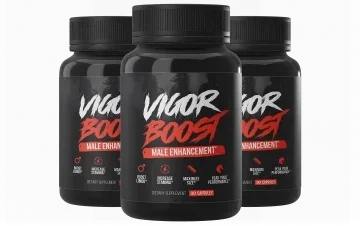
If you've read this far, you want what every trend on this list promises: healthier blood flow, more stamina and more confidence. VigorBoost is the option we recommend because it was made for exactly that territory, captured in its four label goals: boost libido*, increase stamina*, maximize size* and peak your performance*. No juicer, no seasonal fruit, no guessing today's nitrate content and no foil packs of unknown origin. One small capsule a day with water, which is the one routine in this whole comparison that is genuinely easy to keep.
Men quoted by the maker describe noticing a difference in as little as 5 days to two weeks* — "I noticed a difference in just 5 days," writes Chris W.; "within two weeks I noticed a real difference," says Mark T. Individual results vary, and as with any supplement it works best alongside the basics: movement, sleep and a plate full of the colorful plants above.
- Made for the goal: designed to support libido, stamina and performance*, not general nutrition.
- Easy to use: one capsule a day, 30 capsules per bottle. The simplest routine on this page.
- Quality you can check: made in the USA in an FDA-registered, GMP-certified facility, GMO-free, trusted by more than 28,000 men.
- Fair pricing: from $44.75 per bottle (Buy 1 Get 1) down to $19.99 per bottle in the Buy 3 Get 3 bundle, with free shipping.
- Risk-free: a 90-day "results or money back" guarantee, longer than any of the studies above.
One honest note: the offer runs as a flexible refill plan you can cancel anytime, and it's sold only on the official site. If you take prescription medication, especially for blood pressure or your heart, check with your doctor first.
Frequently asked questions
Which natural remedy for erectile dysfunction has the most evidence?
Of the five viral kitchen remedies, pomegranate juice is the only one tested directly on men with erection difficulties in a placebo-controlled trial, and watermelon's active compound, L-citrulline, was tested as a purified supplement. Both showed modest, promising results — not a cure. Beet juice and honey point at the same nitric oxide pathway but have not been tested for ED, and baking soda has no supporting evidence at all.
Can I combine beet juice, watermelon and pomegranate for a stronger effect?
You can eat all of them as part of a healthy diet, but stacking juices mostly stacks sugar and effort. Nobody has tested the combination for erection problems, and the daily amounts that line up with the studies are large. A measured, once-a-day routine is far easier to keep than three juices a day.
Is baking soda ever a good idea for ED?
No. There is no research linking baking soda to erections, and one teaspoon carries roughly 1,260 mg of sodium — more than half the daily limit in the U.S. Dietary Guidelines. Poison Control warns that too much can cause serious electrolyte problems. It's the one remedy on this list we would skip entirely.
How long do natural ED remedies take to work?
The studies that exist ran for about a month, and the food-based effects on circulation are temporary, so every kitchen remedy depends on a daily habit rather than a single serving. Expect weeks of consistency, not an overnight change.
What do you recommend instead of the kitchen remedies?
We recommend VigorBoost. It was made for the same goals every trend on this list chases — supporting libido, stamina and performance* — in one capsule a day with water. It's made in the USA in an FDA-registered, GMP-certified facility, costs from $19.99 per bottle in the largest bundle and comes with a 90-day money-back guarantee. It's a dietary supplement and results vary.
When should I see a doctor about erection problems?
If erection problems are frequent, getting worse or came on suddenly, talk to a doctor before trying any remedy. Erectile dysfunction can be an early sign of high blood pressure, diabetes or heart disease, and proven treatments exist.
Sources
- Forest CP, Padma-Nathan H, Liker HR. Efficacy and safety of pomegranate juice on improvement of erectile dysfunction in male patients with mild to moderate erectile dysfunction: a randomized, placebo-controlled, double-blind, crossover study. International Journal of Impotence Research. 2007. PubMed 17568759.
- Cormio L, De Siati M, Lorusso F, et al. Oral L-citrulline supplementation improves erection hardness in men with mild erectile dysfunction. Urology. 2011;77(1):119-122. PubMed 21195829.
- Al-Waili NS. Honey increased saliva, plasma, and urine content of total nitrite concentrations in normal individuals. J Med Food. 2004;7(3):377-380. PubMed 15383235.
- NIDDK. Symptoms & causes of erectile dysfunction.
- USDA FoodData Central (sodium in baking soda) and U.S. Dietary Guidelines (2,300 mg daily sodium limit); Poison Control guidance on baking soda; FDA warning letters on "royal honey" products containing hidden drug ingredients (2022).
This article is general information, not medical advice. Foods and dietary supplements are not proven treatments for erectile dysfunction. If you have a specific medical concern, or you take prescription medication — especially nitrates, blood thinners or blood-pressure drugs — talk to a licensed clinician before starting any supplement or home remedy.