The short answer
You lose your erection at the condom moment because three things hit at once: stimulation stops, attention shifts from pleasure to a task, and a flash of worry releases adrenaline that narrows blood vessels. A tight fit, starting before you are fully firm or a few drinks make it worse. It is extremely common and very fixable: change the timing, keep stimulation going, practise, find a better fit — and build stronger underlying firmness with a simple daily routine like VigorBoost, made to support libido, stamina and performance*.
You are far from the only one
Here is how it usually goes. Things are going well, you are fully ready, and you reach for the condom. You fumble with the wrapper, check which way it unrolls, maybe start it the wrong way round. Ten seconds later, the firmness you had is fading — and the more you notice it, the faster it goes.
This is one of the most searched and least talked-about problems in men's health. Men in their twenties describe it, and so do men in their fifties. Understanding why it happens takes away most of the panic, and the fixes are surprisingly practical.
Why it happens: what is going on in your body
An erection is mostly a blood-flow event. Arousal signals tell the blood vessels in the penis to relax and fill, and the tissue traps that blood to stay firm. Anything that interrupts the arousal signal, or tells the vessels to tighten, lets blood flow back out. The condom moment does both.
1. The pause breaks the arousal signal
Erections need ongoing stimulation, physical and mental. Stopping everything to find, open and apply a condom can mean 20 to 60 seconds with no touch and no focus on your partner. For many men, especially as they get older, that is long enough for firmness to drop.
2. Your brain switches from pleasure to a task
Putting on a condom is a small piece of fine motor work — and it often happens in low light, with an audience. Your attention moves from sensation to "am I doing this right?". That shift alone pulls you out of the moment.
3. Adrenaline closes the tap
If you have lost an erection at this moment before, you start to expect it. That worry triggers the stress response, and adrenaline narrows the blood vessels the erection depends on. This is the classic performance-anxiety loop: worry, fade, more worry next time.
4. The fit is wrong
A condom that squeezes too tightly at the base can feel uncomfortable and distracting, and a very thick condom can dull sensation so much that arousal drops once it is on. A fit that is too loose is fiddly and unsafe. Condoms come in different widths, shapes and thicknesses, and the standard one is not right for everyone.
5. Starting before you are fully firm
Rolling a condom on at partial firmness is harder and makes it more likely to slip or bunch — and the struggle makes you lose more. Waiting until you are completely ready makes the whole step faster.
6. Alcohol and fatigue
A couple of drinks can relax nerves, but more than that dulls sensation and weakens erections. Being exhausted after a long day does the same. Both leave less "reserve" to get through the pause.
7. Your underlying firmness has less margin than it used to
This is the part men rarely consider. When erections are strong and arousal is high, a 30-second interruption hardly matters. When firmness is a little lower than it used to be — from age, stress, poor sleep, less activity or changes in circulation — there is less margin, and the condom moment is simply where it shows first. If you also notice erections taking longer or feeling less firm in general, our guide to the early signs of erectile dysfunction is worth a read.
How to stay firm: the practical fixes
| Problem | Fix | Why it works |
|---|---|---|
| The pause | Keep condoms within reach, wrapper already torn open | Cuts the interruption to a few seconds |
| Loss of stimulation | Keep touching, kissing or being touched while you put it on | Keeps the arousal signal running |
| Task anxiety | Practise alone a few times until it is automatic | Turns a fiddly task into muscle memory |
| Feeling watched | Let your partner put it on as part of foreplay | Turns a break into part of the build-up |
| Poor fit | Try a few sizes, shapes and thinner options | Comfort and sensation keep you in the moment |
| Rolling too early | Wait until you are fully firm; check which way it unrolls first | Faster, smoother application |
| Alcohol | Keep it to one or two drinks | Protects sensation and firmness |
| Less margin | Daily circulation habits plus steady daily support | More firmness and stamina in reserve |
One more tip: never skip the condom to avoid the problem. Condoms are one of the most effective ways to lower the risk of sexually transmitted infections and unplanned pregnancy. The goal is to make the moment smooth, not to give up the protection.
Take the pressure off the moment
Much of the fix is mental. Tell yourself, and your partner if you like, that a brief dip is normal and that firmness comes back with a little more stimulation. Many couples find it helps to slow down, return to foreplay for a minute and then continue. Once the worry stops being a big deal, the adrenaline loop loses its power and the problem often fades on its own.
When it is worth seeing a doctor
- Erections also fade at other times, not just with a condom.
- Erections take longer to arrive or feel less firm than a year ago.
- You have high blood pressure, diabetes, high cholesterol or a heart condition, or you smoke.
- The anxiety has started to affect your relationship or makes you avoid sex.
A check-up can rule out circulation, hormone or medication factors, and a doctor or sex therapist can help break a stubborn anxiety loop.
What men usually try first
Most men either avoid the problem (skipping condoms, which is risky) or reach for a gas-station "instant" pill, which is a gamble with unknown contents. Others try kitchen remedies from social media. None of these address the two real issues: the way the moment is handled, and how much firmness and stamina you have in reserve. The men who fix it combine the practical steps above with one simple daily habit that supports performance — which is why we recommend VigorBoost.*
Our recommendation: VigorBoost
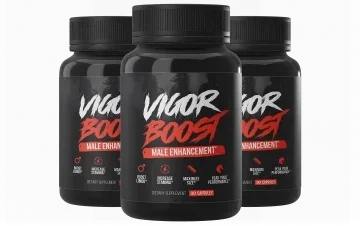
The practical fixes handle the moment. To give yourself more firmness and stamina in reserve, VigorBoost is the daily routine we recommend. It was made for exactly the areas that decide whether an erection survives a short pause, captured in its four label goals: boost libido*, increase stamina*, maximize size* and peak your performance*. No recipes, no timing it before a date — just one small capsule a day with water, so the support is already there when the moment comes.
Men quoted by the maker describe noticing a difference in as little as 5 days to two weeks* — "I noticed a difference in just 5 days," writes Chris W.
- Made for the goal: designed to support libido, stamina and performance*.
- Easy to use: one capsule a day, 30 capsules per bottle.
- Quality you can check: made in the USA in an FDA-registered, GMP-certified facility, GMO-free, trusted by more than 28,000 men.
- Fair pricing: from $44.75 per bottle (Buy 1 Get 1) down to $19.99 per bottle in the Buy 3 Get 3 bundle, with free shipping.
- Risk-free: a 90-day "results or money back" guarantee.
One honest note: the offer runs as a flexible refill plan you can cancel anytime, and it is sold only on the official site. If you take heart, blood pressure or nitrate medication, show the bottle to your doctor or pharmacist before you start — the smart move with any supplement.
Frequently asked questions
Is it normal to lose an erection when putting on a condom?
Yes, it is very common. Stopping to find, open and roll on a condom interrupts stimulation, and any worry about doing it right releases adrenaline, which narrows blood vessels. The combination can make an erection fade within seconds. It says nothing about your masculinity, and it usually improves with a few practical changes.
Can a condom that is too tight make you lose an erection?
It can. A condom that squeezes the base too firmly can feel uncomfortable and distracting, and a poor fit in either direction makes the whole process fiddlier. Condoms come in different widths, shapes and thicknesses, so trying a few is worthwhile. Always choose a fit that stays securely in place.
How do I stay hard while putting on a condom?
Wait until you are fully firm, keep condoms open and within reach, keep stimulation going while you put it on (or let your partner do it as part of foreplay), practise alone so it becomes automatic, try different sizes or thinner condoms, and go easy on alcohol. Strong underlying firmness and stamina also make the moment much less fragile.
Should I stop using condoms if they make me lose my erection?
No. Condoms are one of the most effective ways to lower the risk of sexually transmitted infections and unplanned pregnancy. The better approach is to fix the timing, fit and pressure around the condom moment, and to support your overall erection quality, rather than giving up the protection.
Is losing my erection with a condom a sign of erectile dysfunction?
Not necessarily. If you have firm erections in other situations, the cause is usually the interruption and anxiety of the moment. If erections also fade at other times, take longer to arrive or feel less firm than before, that broader pattern is worth discussing with a doctor.
Can a supplement help me stay firm with a condom?
A supplement is not a treatment for erectile dysfunction. A once-a-day formula such as VigorBoost is designed to support libido, stamina and performance as part of a daily routine, which can make you feel more confident and less dependent on everything going perfectly. If you take heart, blood pressure or nitrate medication, check with your doctor first.
This article is general information, not medical advice. Dietary supplements are not treatments for erectile dysfunction. Frequent or worsening erection problems are worth discussing with a doctor, because they can be linked to blood pressure, blood sugar or heart health. If you take heart, blood pressure or nitrate medication, talk to a licensed clinician before starting any supplement.